

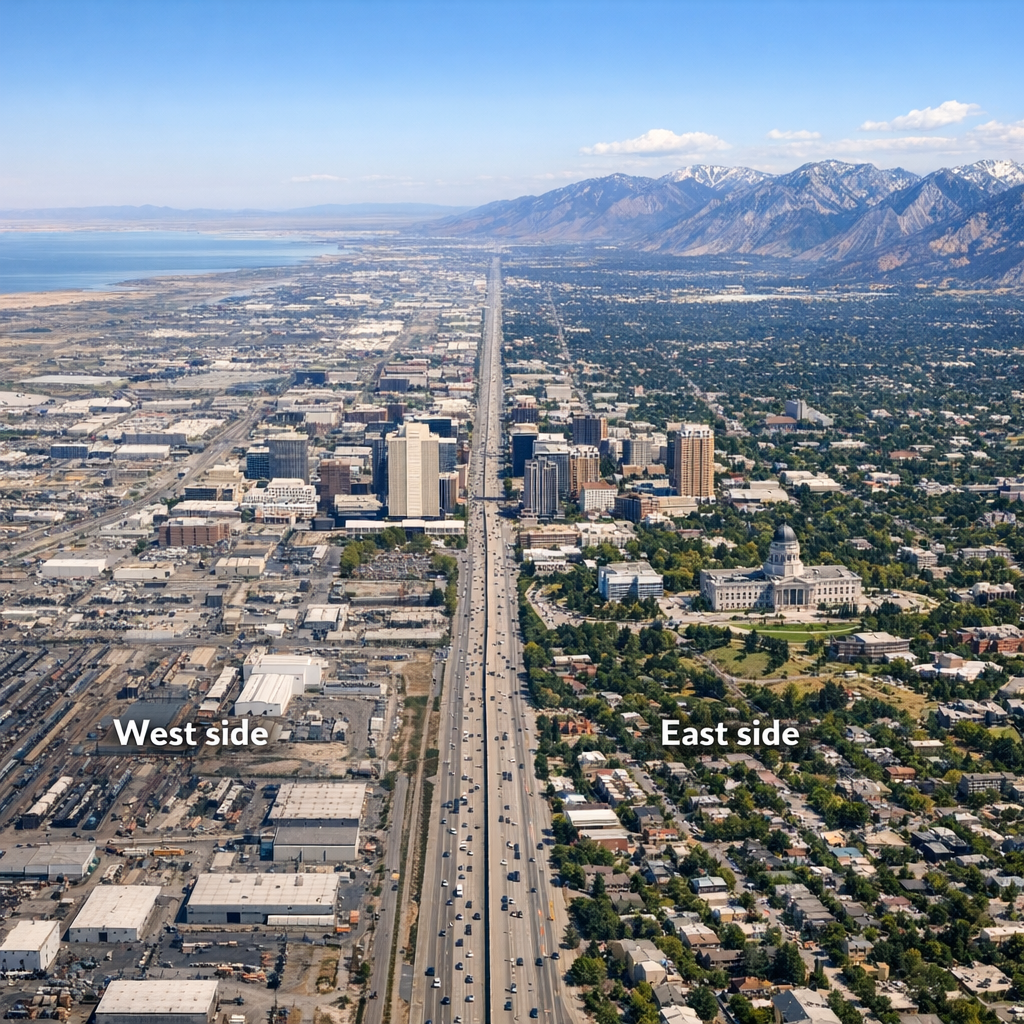
Salt Lake City is actively working to address longstanding disparities between its west and east sides through community-driven initiatives and infrastructure improvements.
Historical Context
The west side of Salt Lake City, encompassing neighborhoods like Glendale, Rose Park, and Poplar Grove, has historically faced challenges stemming from redlining practices that deemed these areas less desirable. This has led to higher poverty rates and limited access to resources compared to the east side.
Community Concerns
Residents have voiced concerns over rapid development, insufficient public transportation, and inadequate public spaces. Turner Bitton, chair of the Glendale Community Council, highlighted the need for investments in parks and public spaces to enhance the quality of life for west side residents.
City Initiatives
In response, Salt Lake City launched the West-East Connections (WEConnect) Study, a two-year initiative aimed at identifying solutions to improve transportation infrastructure and address the west-east divide. Mayor Erin Mendenhall emphasized the importance of community input, stating that the best solutions come from residents who experience these challenges daily.
The study focuses on overcoming physical barriers like Interstate 15 and major railroad lines that separate the west side from the eastern parts of the city, including downtown. By prioritizing community-driven solutions, the city aims to create a more connected and equitable urban environment.
Looking Ahead
As Salt Lake City continues to grow, addressing these disparities remains crucial. Ongoing community engagement and targeted investments are essential to ensure that all residents, regardless of their neighborhood, have equal access to opportunities and resources.